
For an old coin that might have collector value, the safest first step is to leave its surface alone. Polishing, rubbing or a household cleaning bath can damage the features collectors pay for. Identify the coin and its condition before choosing any treatment.
Learn the framework for U.S. coin dates, varieties and condition.
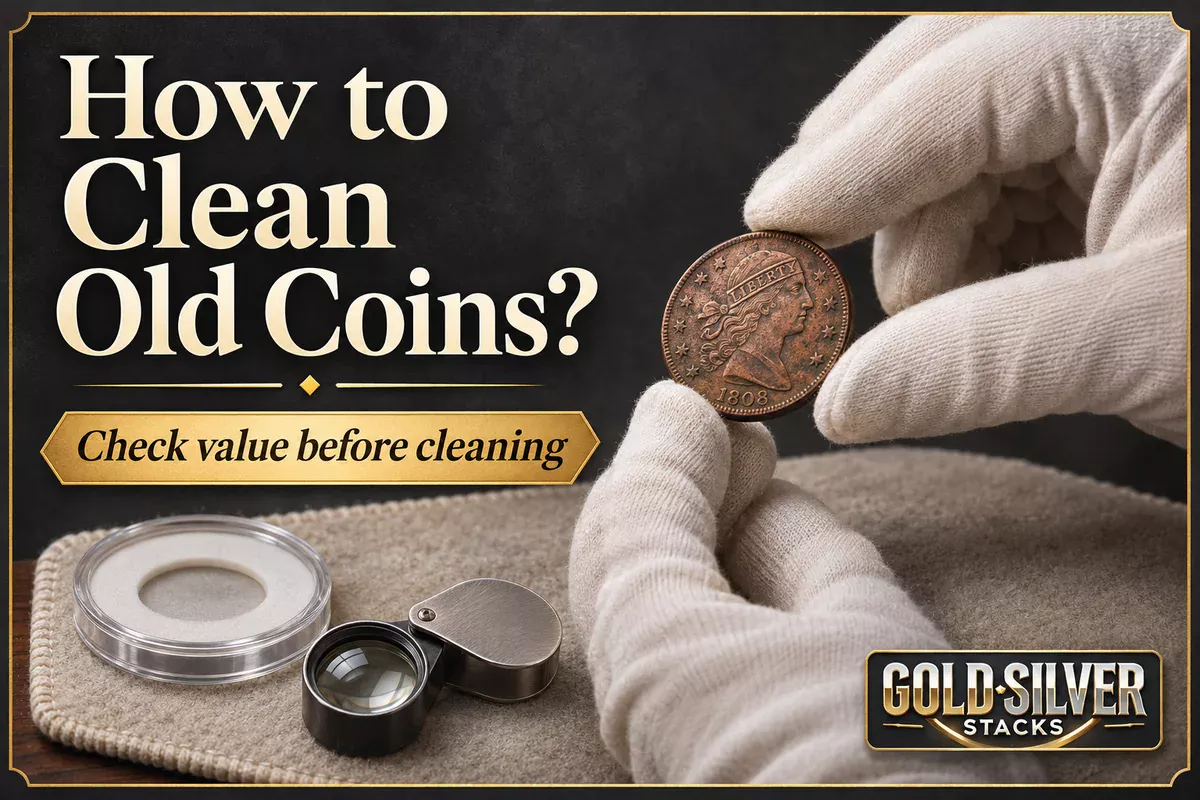
Should you clean an old coin before selling it?
An old collectible coin should generally be offered for assessment with its surface intact. The U.S. Mint warns that cleaning and polishing can reduce value. A buyer can evaluate original toning and dirt; polishing can remove evidence that cannot be put back.
Start with the date, denomination, mint mark and clear photographs of both sides. Keep a potentially valuable coin separate from ordinary change. The rare coin identification guide helps you decide which reference to consult.
Why can making a coin shiny reduce its value?
Cleaning can change the original surface rather than simply remove loose dirt. Rubbing can leave fine hairlines; chemical treatment can alter color or luster. Those changes affect how collectors assess preservation.
Find more coin and physical-metal education at GoldSilverStacks.
NGC describes harsh cleaning as a condition that can lead to Details grading instead of an ordinary numerical grade. A Details designation does not make every coin worthless, but it changes the relevant sales comparisons. Compare damaged coins with similarly described coins, not problem-free examples.
What should you do with dirty or sticky coins?
Identify the coin and the surface problem before deciding on removal. Dirt, stable toning, active corrosion and residue are different conditions. A photograph may help with initial triage, but it cannot always reveal what is on the metal.
- Unknown or potentially scarce coin: leave it untreated and request an assessment.
- Loose dirt: avoid rubbing it across the surface.
- Suspected active corrosion or sticky residue: isolate the coin in a suitable holder and consult a conservation specialist.
- Ordinary spending change: separate hygiene needs from a claim that cleaning will increase collector value.
Do not experiment on a coin simply because a household recipe worked on jewelry. Jewelry maintenance and numismatic surface preservation have different aims.
How is professional conservation different from cleaning?
Professional conservation evaluates whether a specific treatment can stabilize or remove a problem while respecting the coin’s surface. NGC explains the distinction between conservation and improper cleaning. Conservation is not a promise of a higher grade or a repair for every previous cleaning attempt.
Ask what problem the service proposes to address, the charges involved and the possible outcomes. For an inexpensive common coin, the treatment cost may exceed its value. For a significant coin with a removable contaminant, an assessment may be worthwhile. The decision needs the actual coin, not a universal cleaning recipe.
How should you handle and store it meanwhile?
Handle the coin by its edge over a soft, clean surface and keep it in a suitable inert holder. Avoid touching the faces or moving grit across them. Label the holder rather than attaching adhesive to the coin.
Record any known past treatment honestly. “Uncleaned” is a claim about the coin’s history, not a description to use merely because you did not clean it yourself. When comparing prices, the grading guide explains why a coin’s surface condition belongs beside its date and mint mark.
These steps address potentially collectible coins. Archaeological finds, ancient coins and seriously corroded pieces require identification-specific advice before treatment.
Learn the framework for U.S. coin dates, varieties and condition.
